
Loading
We use strictly necessary cookies to run this site, and analytics cookies to understand how it's used. See our Privacy Policy for details.
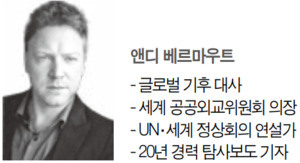
Andy Vermaut is the Global Climate Ambassador and a leading voice in global diplomacy and human rights advocacy.
Summary
As President of the World Council for Public Diplomacy, European Community House, and Fundamental Rights Movement (Postversa), he has exposed human rights abuses from Sudan to Iran. With over 20 years as an award-winning investigative journalist, he has uncovered systemic failures through data-driven storytelling. A sought-after keynote speaker at the UN and global summits, he bridges climate urgency with human rights accountability.
Guided by his conviction that “Climate crimes are human rights violations,” Vermaut reframes ecological crises as legal imperatives, calling for reparations for the most vulnerable. ⓒ천지일보 2026.07.27. Europeans normally enter a supermarket without thinking about cybersecurity. They think about bread, milk, vegetables, dinner and the household budget.
Yet on 2 November 2026, that ordinary routine was interrupted in multiple European countries when refrigerators and freezers at grocery stores began displaying dangerously abnormal temperatures. At some locations, temperatures reportedly climbed to 50 degrees Celsius. Retailers removed potentially compromised goods, called in technicians and tried to protect the integrity of their food supplies.
What might initially look like an unusual maintenance problem became an unsettling example of the physical consequences of digital interference. For a Belgian observer, the significance lies not simply in lost merchandise. It lies in the revelation that even a system designed to preserve food can become vulnerable when connected technology is insufficiently protected.
What actually happened in Europe Reports from Reuters, Euronews and other news organizations documented affected retailers in Belgium, Sweden, Ireland, the Netherlands, Luxembourg and Estonia, with additional refrigeration incidents reported elsewhere. The Belgian impact included outlets associated with Delhaize, Carrefour, Intermarché and Spar, while an Ikea store in Mons also reported difficulties. Carrefour described problems at approximately 15 of its roughly 700 Belgian stores, illustrating why the incidents should not be presented as a collapse of the entire national food distribution system.
In Ireland, 13 SuperValu stores were affected. Swedish chains ICA and Coop reported problems in some locations, and similar malfunctions reached small retailers. Belgium's federal prosecutors opened an investigation.
The November incidents followed a significant episode in France in October, suggesting that vulnerabilities in remote refrigeration management deserve urgent attention beyond any individual retailer. The identities and motives of the perpetrators have not been publicly established, and investigators have not conclusively demonstrated that every reported incident was part of one centrally directed campaign. How a digital command can spoil physical food Modern refrigeration is no longer just a compressor and a thermostat.
Large and small businesses increasingly use network-connected controllers that allow authorized specialists to monitor temperatures remotely, adjust operating conditions, detect faults and reduce energy consumption. This is often efficient and economically sensible. The danger arises when exposed management systems, outdated software, inadequate access controls or unpatched vulnerabilities give unauthorized users an opportunity to interfere.
Some operators reported that equipment had been placed into defrost mode or that temperature settings were altered. A command issued through a poorly secured digital interface can therefore create immediate physical consequences: perishable goods become unsafe, employees must discard stock, deliveries may be complicated and customers see empty refrigerated shelves. These are not abstract stolen data files.
They are tangible losses occurring in front of shoppers. Why the Belgian experience matters Belgium occupies a dense logistical position in Europe. Distribution networks cross borders, supermarket groups serve communities with different languages, and food retailers depend upon suppliers and technical contractors working far beyond any one town.
When an installation is controlled or maintained remotely, the security of a small neighborhood store partly depends on choices made by equipment manufacturers, installers, software developers and service providers. A shopkeeper cannot personally audit every line of code in a refrigeration controller. It is therefore insufficient to tell local businesses that cybersecurity is entirely their individual responsibility.
Manufacturers must provide secure products and clear updates; service companies must protect remote access; retailers must maintain workable contingency plans; and public authorities must make it easier to report incidents and share technical warnings without unnecessary delay. The hidden price of disrupted cooling A failed freezer has an immediate financial cost, but a proper accounting must go further. The retailer may lose frozen meat, dairy products and prepared meals; staff may work through the night; additional refrigeration specialists may be required; replacement stocks must be transported; and insurance or compensation questions may take time to resolve.
Food waste adds an environmental burden because agricultural resources, energy, transport and packaging have already been consumed. The small business with limited reserves may be less able to absorb these losses than a large chain. Consumers may become anxious about food safety, even when businesses act responsibly and remove questionable products.
Cybersecurity, in this context, becomes part of consumer protection, commercial continuity and environmental stewardship. The questions Europe must ask The first question is whether essential connected equipment can operate safely when the internet connection is unavailable or under attack. A second is whether technicians and store staff have simple ways to verify temperatures locally, isolate compromised systems and prevent food from being sold when safety cannot be guaranteed.
A third is whether manufacturers support products for a sufficiently long period, particularly when equipment remains physically usable after its software reaches the end of its supported life. A fourth concerns transparency: incidents should be communicated accurately, neither concealed nor exaggerated. Finally, investigators must distinguish verified technical facts from speculation about responsibility.
It is tempting to attribute every troubling event to a hostile foreign power or to artificial intelligence. Without credible evidence, that temptation should be resisted. Public confidence is not strengthened by a dramatic accusation that cannot be substantiated.
10월 14일(현지시간) 프랑스 몽트뢰유의 한 슈퍼마켓에서 직원이 냉장 코너의 상품을 다시 채워 넣고 있다. 당시 이곳을 포함한 프랑스 내 여러 슈퍼마켓은 사이버 공격을 받은 상태였다. (출처: 뉴시스) A European concern with global relevance South Korean readers know better than most that sophisticated digital infrastructure can be both a national strength and a source of exposure. The European refrigeration incidents offer a lesson relevant to any technology-intensive economy: protecting networks is only one aspect of protecting society. Hospitals, transport systems, warehouses, municipal utilities, farms and food stores all rely on increasingly interconnected equipment.
Industrial cybersecurity should therefore be evaluated according to what ordinary people need to remain safe, healthy and supplied with essential goods. Security deserves attention before a failure becomes visible, not simply after images of discarded food appear on television. Trust is part of the infrastructure In my work as a Belgian journalist, I believe the public deserves reporting that separates facts from suspicion while asking demanding questions of those responsible for prevention.
The responsible response to the refrigeration incidents is not panic, and it is not indifference. It is to recognize that convenience and connectivity are useful only when matched by accountability, maintenance and practical safeguards. Europe should learn from the November disruptions without pretending that every refrigerator has become a weapon or that every digital malfunction has the same cause.
A society is resilient when its essential services can withstand interference, when professionals can act promptly and when citizens can trust that problems will be explained truthfully. A supermarket freezer may look like the most ordinary appliance imaginable. This week, it reminded Europe how much of everyday life depends on technology that most people never see.
KazaSec's take
Incidents like this rarely start with the headline event itself, they usually trace back to an exposed remote-access endpoint, an unpatched perimeter system, or a credential phished weeks earlier. The organizations that recover fastest are the ones that tested their defenses and their incident response plan before they needed them.
Coverage details
Relevant from KazaSec
More security news
We help organizations find and fix the gaps before they make headlines.