
Loading
Loading
We use strictly necessary cookies to run this site, and analytics cookies to understand how it's used. See our Privacy Policy for details.
Well, what a month it has been in cyber-security!
Summary
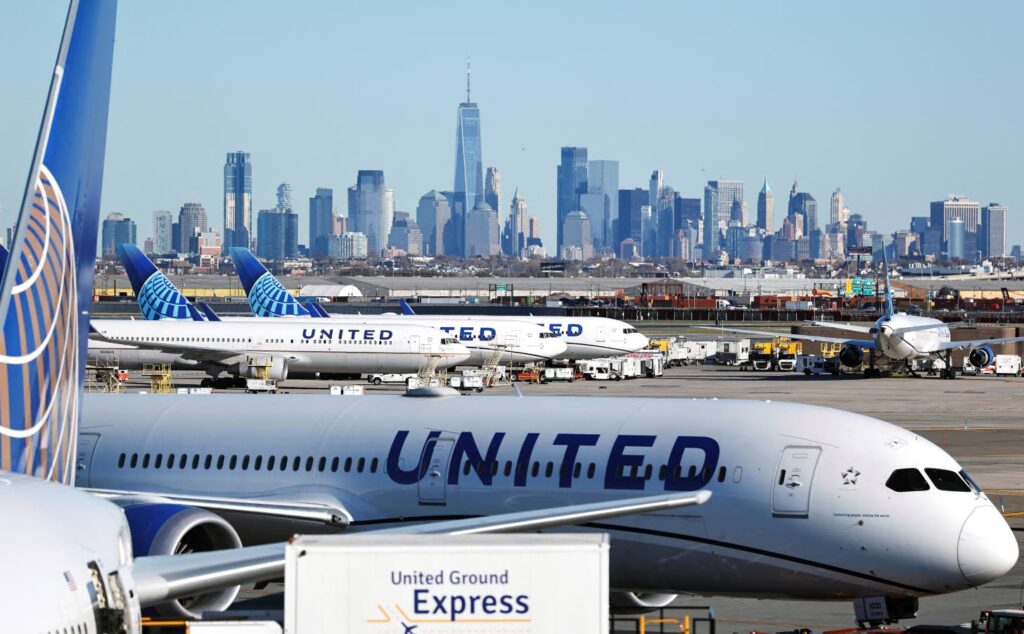
First there were the attacks on the refrigeration systems all across Europe which sent so many into a state of panic. I mean… who attacks refrigerators? Then on Friday, November 13, the US Federal Aviation Administration (FAA) halted every departing flight in the country for nearly five hours.
More than 12,000 flights were cancelled that day. Microsoft’s Outlook, Teams and Copilot went down the same day. By Monday, customers of Bank of America, JPMorgan Chase, and Wells Fargo could not reach their money online.
US officials were quick to say this was not a coordinated cyberattack. The likelier culprit is more troubling: Businesses racing to patch software flaws that artificial intelligence (AI) is now finding faster than they can safely be fixed. Microsoft CEO Satya Nadella admits AI helps his company find and fix bugs, “but that means you’ve got to then patch them, and that creates instability”.
Microsoft addressed more than 1,200 vulnerabilities this month, nearly 20 times last November’s figure, according to Qualys. Bank of America added 1,000 contractors to its 3,000 staff to patch flaws exposed by AI models, Anthropic’s Mythos among them. Four thousand people, one bank, one job.
To be fair, not every outage was AI. Microsoft blames a latent bug, and JPMorgan says AI played no part in its disruption. The FAA’s initial finding points to newly installed routers flooding legacy systems at 17 facilities.
The common thread: change pushed into complex, ageing systems faster than it can be safely tested. How we got here In April, Anthropic revealed that Mythos had uncovered thousands of previously unknown vulnerabilities in every major operating system and web browser. In June, the Five Eyes intelligence partners warned that cyber risk assumptions can now become outdated “in months, not years”.
The machines that find holes for defenders find them for criminals too. So the patch can’t wait. Yet a patch pushed into core systems within hours, without full testing, is itself a risk.
Your vendor’s problem is your problem Take Amadeus, which runs reservations for much of the airline industry. Attackers “exploited a vulnerability” and reached booking data held for at least eight airlines, including Caribbean Airlines, which serves Kingston and Montego Bay. On October 9, an Amadeus outage forced Southwest Airlines into manual baggage and boarding as more than 1,200 flights ran late.
One vendor. At least eight airlines. Not one of them could fix the flaw themselves.
Closer to home, Minister Andrew Wheatley warned in September that attackers now use AI “to find the weak door first”. Last month JETS, operator of MultiLink, confirmed attackers reached part of its internal systems. We have been saying this for years Truth be told, none of this should surprise anyone here.
Local practitioners, myself included, have sounded this alarm for five years, JaCIRT loudest of all. In early 2022, JaCIRT Director Lieutenant Colonel Godphey Sterling warned that weaknesses in our infrastructure made Jamaica a soft target for ransomware gangs. By late 2022, incidents reported to JaCIRT had doubled.
In 2024 he flagged local vulnerabilities left unfixed for up to five years. Last December, as systems were rushed back after Hurricane Melissa, he cautioned that restoration shortcuts could sharply increase exposure. Speed versus security.
Sound familiar? The numbers bear him out. Government counts attempted attacks rising from 12 million in 2022 to more than 49 million in 2025.
Regionally, ransomware hit 10 Caricom states in 2023, Jamaica among them, and Telecommunications Services of Trinidad and Tobago (TSTT) in Trinidad lost data on more than a million customers. In these pages last year I called for “rapid patch orchestration”. The warnings were there.
Too many didn’t budget for them. What businesses must do now The answer is not to stop patching. That would be like removing the brakes because they squeal.
Patch with discipline. • Know what you own. You cannot patch what you don’t know you have. Retire legacy systems and switch off what nobody uses. • Triage ruthlessly.
Fix first what is actively exploited and what faces the Internet. • Test fast, roll out in rings. Pilot group first, watch for 24 to 48 hours, then go wide. • Always have a way back. A rollback plan, and backups you have actually restored from. • Buy time.
Where you cannot patch today, Multi-Factor Authentication (MFA), network segmentation and tighter access hold the line. • Interrogate your vendors. Ask how they test fixes and how fast they will report a breach. Put it in the contract. • Rehearse the manual fallback.
Southwest could board passengers by hand. Could you take orders or payments if your main system vanished for a day? For MSMEs, a good managed service provider, automated patching and, yes, AI on defence can close much of the gap.
Bottom line AI has permanently changed the speed of this game. Boards must treat, patch and change management as a business risk with a budget, not an IT chore. Patch fast.
Patch smart. But never patch blind. Trevor Forrest is chairman, Lignum Security Limited, cybersecurity, digital transformation & AI consultant and senior advisor for science, technology and special projects at the Office of the Prime Minister.
KazaSec's take
Incidents like this rarely start with the headline event itself, they usually trace back to an exposed remote-access endpoint, an unpatched perimeter system, or a credential phished weeks earlier. The organizations that recover fastest are the ones that tested their defenses and their incident response plan before they needed them.
Coverage details
Related security advisories
Relevant from KazaSec
More security news
We help organizations find and fix the gaps before they make headlines.