
Loading
Loading
We use strictly necessary cookies to run this site, and analytics cookies to understand how it's used. See our Privacy Policy for details.
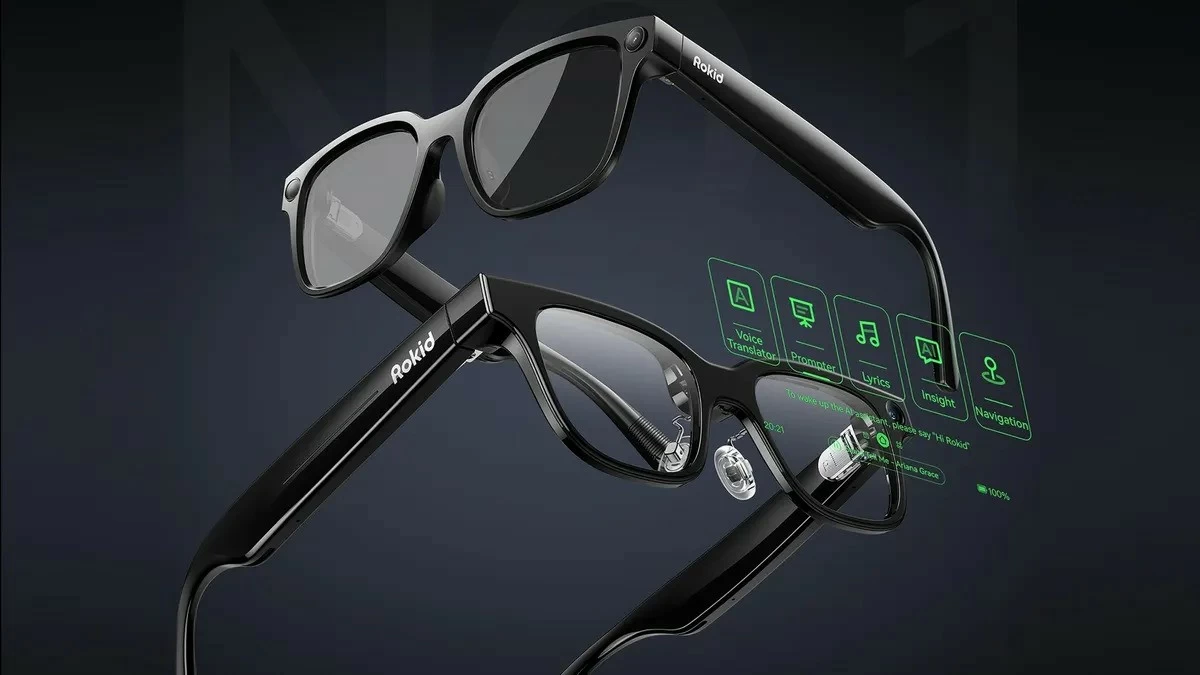
I have used the Rokid AI Glasses for some time now, and I can say this without hesitation: they are still my best tech purchase so far.
Summary
That is a big claim from someone who spends much of his time trying new gadgets. But what makes these glasses different is not any single specification. It is how easily they have found a place in my routine.
I can put them on, give a presentation, take a call, or capture a moment without constantly reaching for my phone. The feature I value most is the teleprompter. I regularly give talks about technology, artificial intelligence (AI) and cybersecurity.
Even when I know the subject well, I don't want to get names, figures, or key points wrong. The glasses put my prepared text within my field of view, with a smart-scroll feature that follows my speaking pace. Instead of repeatedly looking down at notes or a screen, I can keep my eyes on the audience.
For anyone who speaks regularly before a crowd, this small change makes a difference. But during an unexpected stay in Karachi, Pakistan, another feature proved far more useful than I expected. I was stranded there on the first day of the Iran-Israel conflict, with the United States becoming directly involved in the fighting.
Suddenly, the translation feature wasn't just something interesting to demonstrate. I was in an unfamiliar place, trying to follow rapidly developing news while much of what I heard around me was in Urdu. I used the glasses to translate what I was hearing into English.
News reports and conversations among staff that I otherwise wouldn't have understood appeared as translated text in my field of view. The translations were accurate enough for me to follow what people were saying and better understand what was happening around me. That experience changed how I looked at the feature.
Translation on smart glasses can sound like one more item on a spec sheet until you find yourself somewhere where you don't speak the language and need to understand what is being said. Rokid says its online translation supports up to 89 languages. I would still verify any translation involving safety, official instructions, or other important information.
Machine translation is not infallible. But seeing translated speech appear before my eyes in Karachi made the language barrier feel much smaller when it mattered. The glasses are useful in more ordinary situations, too.
They have a 12-megapixel camera for hands-free photos and videos, four microphones, and directional speakers for calls and audio. I can capture what I am seeing without immediately taking myself out of the moment to reach for a phone. The display inside the lenses adds another layer.
Apart from translations and teleprompter text, it can show directions and responses from the AI assistant. The information appears when needed rather than demanding attention all the time. At about 49 grams, the glasses are surprisingly light considering the camera, microphones, speakers, and display packed into the frame.
They still feel like technology sitting on my face — there is no pretending otherwise — but they are comfortable and useful enough that I actually want to bring them with me. Battery life is the one limitation I have had to plan around. Occasional voice commands are one thing, but recording video or keeping the display active uses power much faster.
That is why I also bought the Rokid Power Capsule. It is a portable battery that attaches magnetically to the back of the glasses’ right temple arm. The useful part is that I can keep wearing and using the glasses while they charge.
If I have a long day of talks or meetings, I can bring extra power with me instead of putting the glasses away to recharge. The Power Capsule adds something to carry and attach, but for the way I use the glasses, it was a sensible purchase. A teleprompter is most valuable when I can count on it throughout an event.
The capsule gives me more confidence to use that feature without watching the battery indicator all day. What matters to me is that I can continue wearing and using the glasses while they charge. On a long day of talks and meetings, that makes the accessory particularly useful.
A teleprompter, after all, is only helpful if it still has power when you walk onstage. Plenty of gadgets impress during the first few days. Some are excellent demonstrations of what technology can do, then slowly disappear into a drawer.
These glasses have been different. The Rokid AI Glasses have earned a place in my routine because they solve actual problems for me, whether I am speaking before an audience or unexpectedly trying to understand Urdu in Karachi. I can keep my notes close, understand a conversation, or capture what I am seeing without putting another screen between myself and the world around me.
That may be the better test of innovation. Not whether a piece of technology looks futuristic, but whether, after the novelty is gone, we still reach for it. I still reach for these glasses after months of using them.
KazaSec's take
AI-related security incidents are a genuinely new category, prompt injection, model manipulation, and data leakage through an LLM integration don't map cleanly onto traditional application security testing, and are worth assessing deliberately rather than assuming existing controls already cover them.
Coverage details
Related security advisories
Relevant from KazaSec
More security news
We help organizations find and fix the gaps before they make headlines.