
Loading
Loading
We use strictly necessary cookies to run this site, and analytics cookies to understand how it's used. See our Privacy Policy for details.
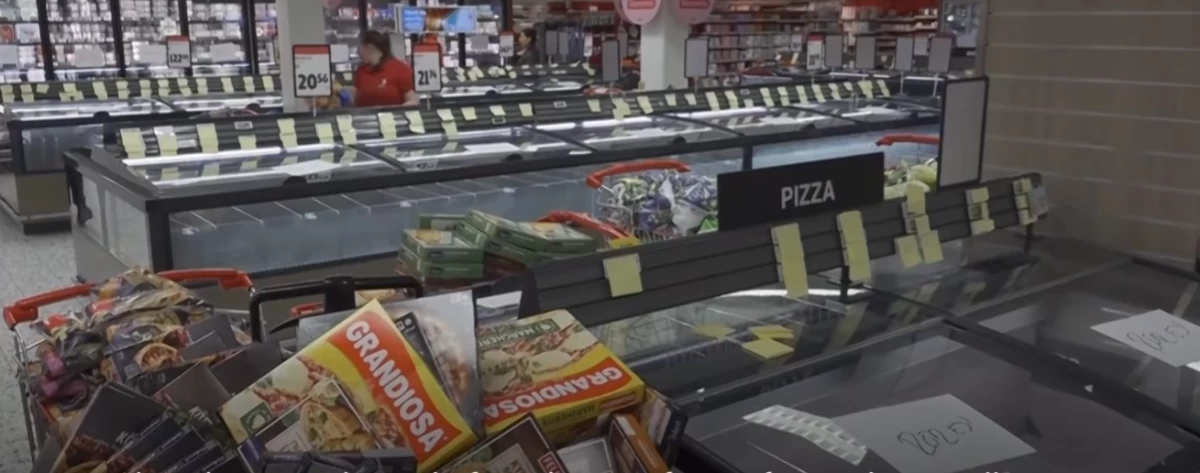
Here's a terrifying scenario: A supermarket falls victim into a cyberattack, where the attackers changed the temperature of the freezers, spoiling millions worth of food.
Summary
Across Europe, from Belgium, Luxembourg, Sweden, and all the way to Finland, grocery stores reported abnormal temperatures in their refrigerated cases. Belgian refrigeration installer Sabcobel said about 20 systems at Delhaize, Carrefour, and Spar stores were affected, while Sweden’s ICA and Coop reported incidents at several stores. The cyberattack involved by switching into defrost mode and forcing it to stay that way, which raised temperatures and spoiling the food.
Stores had no choice but to dispose their inventories. The disruption follows an October attack in France, where hackers allegedly seized control of cooling systems at hundreds of supermarkets, including Carrefour, Monoprix, and Intermarché locations. French authorities said the attack caused food losses and small fires, and the Paris prosecutor’s cybercrime unit opened an investigation.
Why refrigeration is a cyber target Modern supermarket cold chains increasingly rely on internet-connected controllers, sensors, and remote-management platforms. Those systems let technicians monitor temperatures, schedule defrost cycles, and diagnose failures without visiting every store—but the same connectivity can be abused if credentials, firmware, or network access are poorly secured. Unlike ransomware, these incidents reportedly involved no ransom demand, pointing more toward disruption or sabotage than straightforward extortion.
The apparent goal was not to encrypt data but to manipulate physical equipment, turning a cyber intrusion into food waste, revenue loss, and potential safety risk. The bigger risk Security researchers often divide corporate technology into IT; email, databases, websites, and operational technology, or OT: the systems that control physical machinery. Supermarket refrigeration sits squarely in OT, alongside building controls, payment terminals, logistics systems, and industrial equipment.
If attackers can alter freezer settings remotely, the same class of vulnerability could theoretically affect cold-storage warehouses, pharmacies, hospitals, food distributors, and other facilities dependent on temperature-controlled supply chains. Investigators have not publicly identified who carried out the latest attacks, and the full technical chain, from initial access to refrigeration-control manipulation, remains unclear. However, it is clear that cyberattacks are moving beyond websites and databases into the equipment that keeps food cold, safe, and on shelves.
KazaSec's take
Incidents like this rarely start with the headline event itself, they usually trace back to an exposed remote-access endpoint, an unpatched perimeter system, or a credential phished weeks earlier. The organizations that recover fastest are the ones that tested their defenses and their incident response plan before they needed them.
Coverage details
Relevant from KazaSec
More security news
We help organizations find and fix the gaps before they make headlines.