
Loading
Loading
We use strictly necessary cookies to run this site, and analytics cookies to understand how it's used. See our Privacy Policy for details.
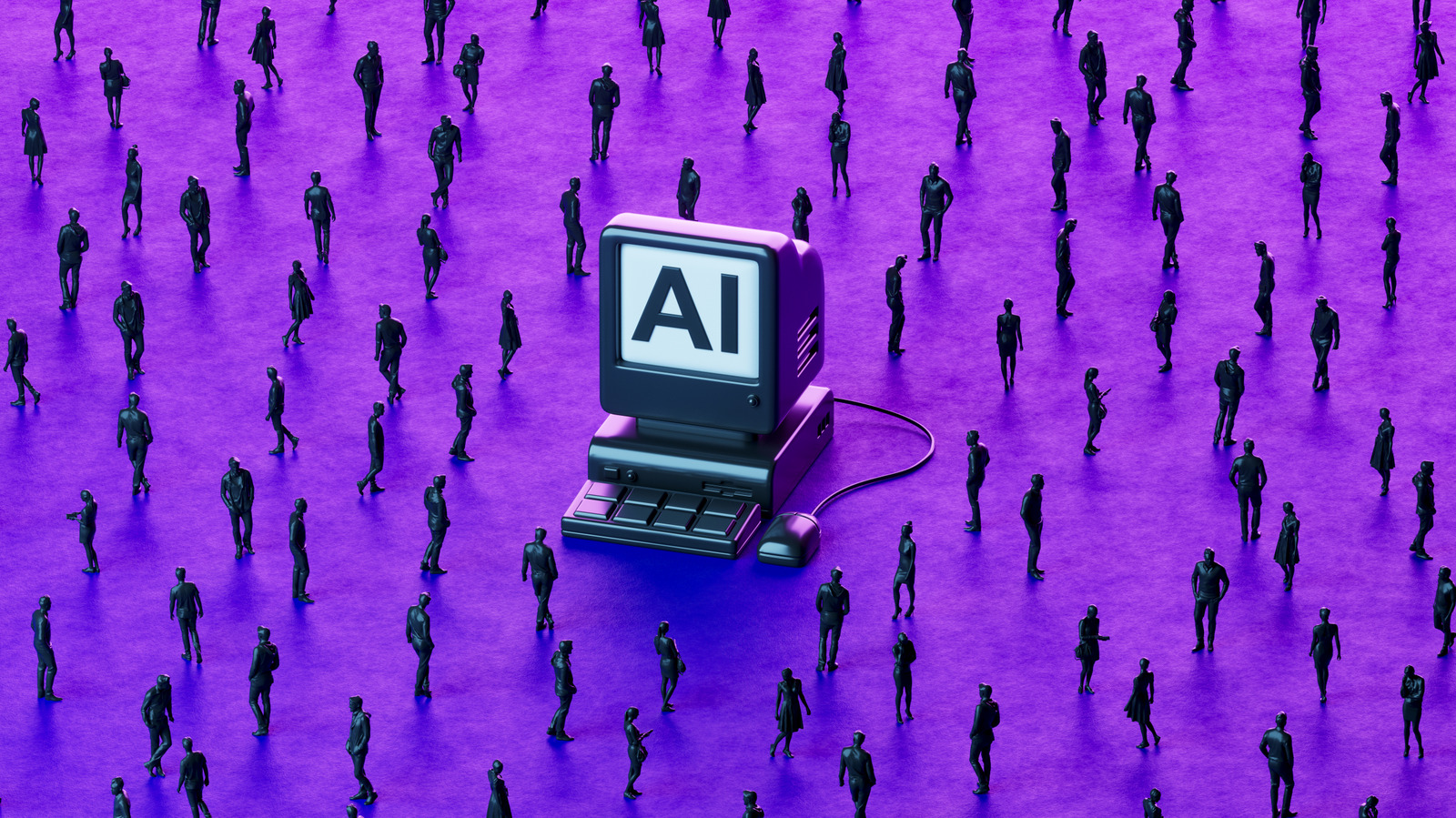
More than half of all web traffic, 53 percent, now comes from bots.
Summary
Cybersecurity group Thales reported the figure in 2026, and its findings show automated traffic keeps gaining ground on human activity online. The year before, bots made up 51 percent. If your feeds feel a bit emptier lately, that number helps explain it.
A social post might read slightly off, or the support agent in the chat box might seem like software. Plenty of people have the same hunch, and it has a name: the dead internet theory. From forum chatter to a manifestoAccording to the theory, bots and other non-human agents now drive most of the internet.
It began in the late 2010s as a conspiracy theory passed around internet forums. In 2021 it took a clearer form. A post on the online community Agora Road, titled "Dead Internet Theory: Most of the Internet Is Fake," claimed that "the Internet feels empty and devoid of people."Supporters of the idea say the internet died around 2016.
In their telling, that was when search engines and social media feeds started pushing more AI-generated content. Bots that no longer need peopleAI has grown more capable since those forum threads first circulated. OpenAI said in September 2026 that it had found a solution to the Navier-Stokes problem, a mathematics puzzle known for being extremely hard.
Some bots now run with no people involved. Meta bought Moltbook in March. It's a social network where AI chatbots talk with each other, often about humans.
Nearly half of Americans use chatbotsChatbot adoption has climbed quickly. In 2024, just 33 percent of Americans told Pew Research they had used chatbots like ChatGPT, Gemini or Copilot. That share rose to 49 percent by 2026, close to half the country.
Pew's report also found that 25 percent of Americans use chatbots daily. The result is something like a chatbot loop. A student uses AI to write an essay, and a teacher uses AI to grade it.
Job hunters have chatbots produce optimized resumes and cover letters, and AI systems screen those applications. Either way, the humans fall out of the middle. Bots end up speaking for both sides.
Beyond the eerie LinkedIn postsSeen up close, it's unnerving. Scripted-sounding LinkedIn posts and a lifeless AI-made poster at the neighborhood cafe can trigger a sort of existential dread. Disinformation is the larger worry.
Bots can push false claims that do real damage, and AI chatbots are a growing source of election disinformation. Lawmakers have done little to regulate the problem, though government agencies have warned about deepfakes and other AI threats to free elections. Money is flowing into the pushbackThe public mood is turning.
In another Pew Research study, 40 percent of Americans said they expect AI to have a negative effect on society over the next 20 years. Spotting AI content is becoming its own industry. Pangram raised $9 million in July 2026 for its AI detection system.
OpenAI began watermarking AI-generated content after the EU AI Act passed. The old internet won't come back because of any of this. Tools like these could still make it easier to recognize the slop and pass over it, which helps people who are online for the reason they came in the first place: talking to other people.
KazaSec's take
Perimeter infrastructure like VPNs, firewalls, and routers needs the same ongoing scrutiny as anything user-facing, it's frequently the oldest, least-monitored layer of the stack, and a popular target precisely because of that.
Coverage details
We've archived 19 other articles touching the same topic (artificial intelligence (ai)) , see the full security news archive.
Related security advisories
Relevant from KazaSec
More coverage on this topic
We help organizations find and fix the gaps before they make headlines.