
Loading
Loading
We use strictly necessary cookies to run this site, and analytics cookies to understand how it's used. See our Privacy Policy for details.
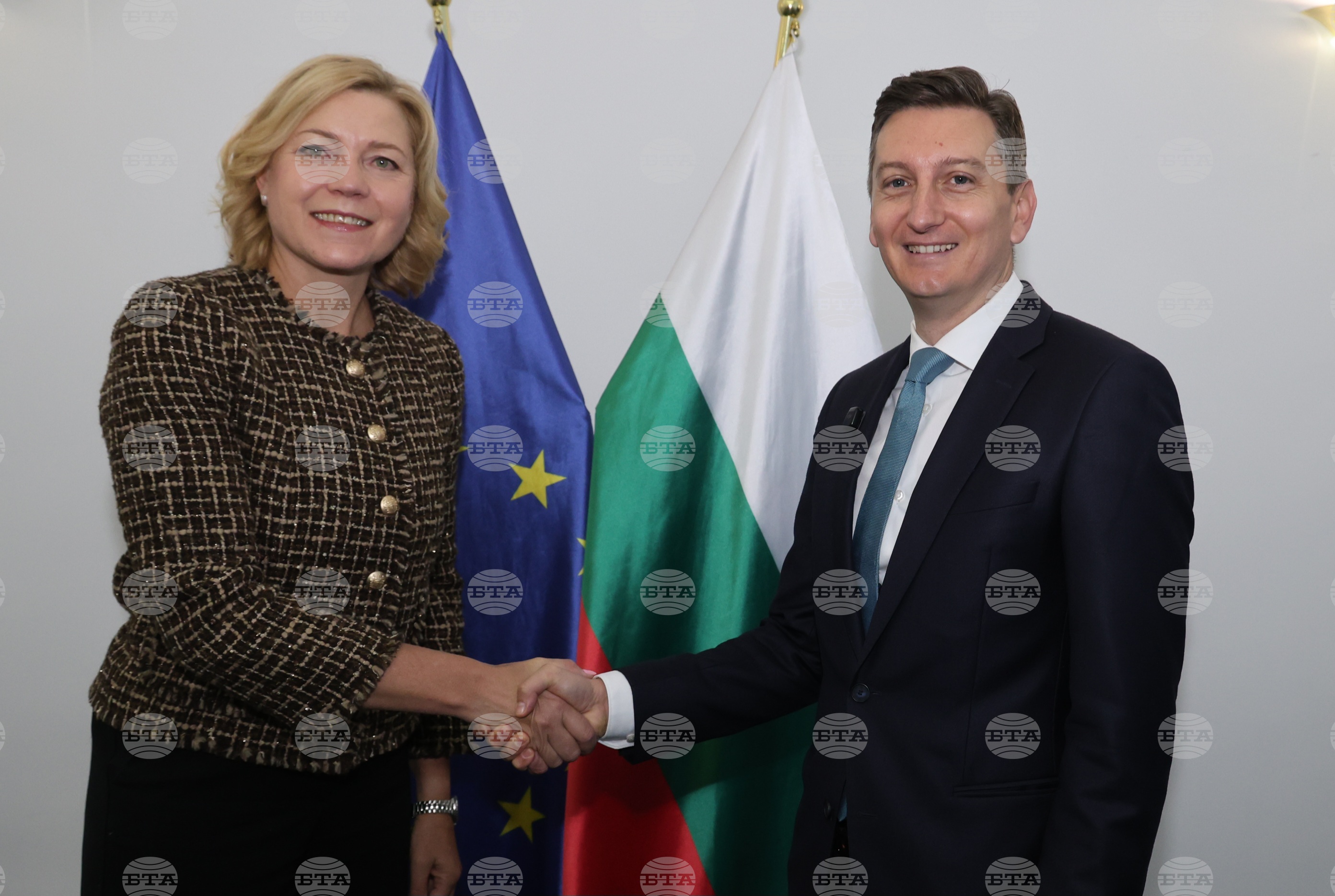
Digital transformation and digital services for citizens and businesses, artificial intelligence (AI), development opportunities for companies in the space sector, cybersecurity, promoting innovation and EU funding for small and medium-sized enterprises were among the topics discussed at a meeting between Bulgarian Minister of Innovation and Digital Transformation Ivan Vasilev and European Commission Executive Vice-President Henna Virkkunen, who is responsible for technological sovereignty, security and democracy, the the Innovation Ministry’s press office said here Monday.
Summary
The importance of developing companies in the space sector and accelerating investment in the field was highlighted at the meeting earlier in the day. Vasilev presented progress in the sector, as well as the measures and initiatives undertaken by his Ministry. He said the next step in Bulgaria’s partnership with the European Space Agency was to achieve associate membership.
This would create additional opportunities for Bulgarian companies and research organisations, the Minister said, citing successful examples of fast-growing Bulgarian companies. Virkkunen and Vasilev discussed the development of start-ups, the regulatory environment, businesses’ access to capital and the use of AI by small and medium-sized enterprises. Digital infrastructure was a key focus of the meeting, along with the BRAIN++ AI factory at Sofia Tech Park, which is expected to create additional opportunities for technology companies, start-ups, entrepreneurs and innovators.
“We are actively working on and making progress with the digital wallet and the digitalisation of public services, ensuring that they are fast and convenient for citizens and businesses. The aim is to bring them together in a single application rather than having them spread across different ones. We want to do everything necessary to make access to electronic services as easy as possible,” Vasilev said.
Virkkunen stressed that this was an important step towards making Europe a more accessible and efficient place to do business, adding that companies should be able to conduct their operations entirely digitally. The meeting at the Bulgarian Ministry also addressed the EU’s next multiannual financial framework, the need for adequate funding for research and development and efforts to improve competitiveness, as well as investment in technology and cybersecurity. Vasilev added that investment through an European programme for digitalisation would be of particular importance.
The two officials also discussed public digital infrastructure, connectivity, the development of artificial intelligence and digital skills. “The EU must lead the way in how it communicates with citizens. When services function seamlessly, this builds trust,” Vasilev said.
He also outlined the SIGMA platform for transparency in public procurement. On cybersecurity, the discussions covered Bulgaria’s national strategy and measures to strengthen cyber defences. Regarding the EU Artificial Intelligence Act (AI Act), it was noted that a number of international discussions on AI safety and security had taken place in recent weeks, with international cooperation being particularly important in this area.
In conclusion, Virkkunen and Vasilev discussed strengthening European technological sovereignty, developing high-tech companies and improving competitiveness. Deputy Minister Mira Yosifova and Yordanka Chobanova, head of the European Commission Representation in Bulgaria, also attended the meeting. Later, Virkkunen visited the new National STEM Centre at Sofia Tech Park, where she toured modern laboratories dedicated to natural sciences, green technologies, 3D modelling, robotics, mathematics and computer science, as well as facilities for artificial intelligence and other fields.
The European Commission Executive Vice-President and Deputy Minister Yosifova subsequently met representatives of leading Bulgarian technology companies and technology organisations. According to a statement from the European Commission Representation in Bulgaria, Virkkunen’s working visit to this country also included a meeting with Prime Minister Rumen Radev.
KazaSec's take
AI-related security incidents are a genuinely new category, prompt injection, model manipulation, and data leakage through an LLM integration don't map cleanly onto traditional application security testing, and are worth assessing deliberately rather than assuming existing controls already cover them.
Coverage details
We've archived 9 other articles touching the same topic (economy) , see the full security news archive.
Related security advisories
Relevant from KazaSec
More coverage on this topic
We help organizations find and fix the gaps before they make headlines.